
Neck Pain
Neck stiffness that comes back week after week is more than a passing stiffness: it almost always has a mechanical cause, often linked to posture and spinal alignment. At the clinic of Dr. Hamza Beghdadi, chiropractor, the assessment relies on objective postural measurements rather than an impression, to understand where the neck pain comes from before proposing a care plan.
Book an Appointment for a Chiropractic Assessment
If neck pain is present today, an assessment may be appropriate right now. Dr. Beghdadi, chiropractor, sees you in Roxboro or Villeray. Le Dr Beghdadi, chiropraticien, vous reçoit à Roxboro ou à Villeray.
Why Consult Dr. Hamza Beghdadi, Chiropractor, for Your Neck Pain
Several chiropractors in Montreal can assess neck pain. What structures Dr. Beghdadi's practice is an approach focused on postural correction and spinal alignment, grounded in objective measurements. To better understand why you should see a chiropractor for a neck condition, here are the markers of this practice: correction posturale et l’alignement vertébral, appuyée sur des mesures objectives. Pour mieux comprendre why you should see a chiropractor pour une condition du cou, voici les repères de cette pratique :
- Training in the CBP technique, based on objective postural measurements.
- Doctor of Chiropractic from UQTR (2013) and more than ten years of practice.
- Dual scientific background: Hamza Beghdadi, D.C., also holds a bachelor's degree in biochemistry.
- Complete assessment at the first visit, with a care plan explained before treatment begins.
- Member of the Ordre des chiropraticiens du Québec (OCQ), the Association chiropratique du Québec, and the Canadian Chiropractic Association.
- Two clinics in Montreal: Roxboro, in the West Island, and Villeray.
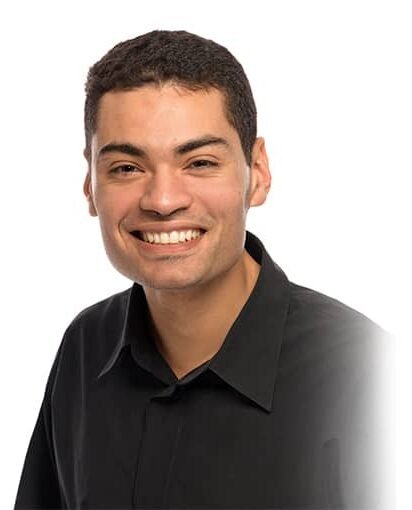
The CBP Angle: Aligning the Cervical Spine and Correcting Posture
The Chiropractic BioPhysics® (CBP) technique aims to restore the physiological curves of the spine, in particular the cervical lordosis. When the natural curve of the neck flattens, tension on the muscles and joints increases. It's this logic that places postural correction and spinal alignment at the centre of care rather than as an add-on. The goal isn't just to calm the pain, but to target the mechanical and neurological cause that brings it back. Chiropractic BioPhysics® (CBP) vise à restaurer les courbures physiologiques de la colonne vertébrale, en particulier la lordose cervicale. Quand la courbe naturelle du cou s’aplatit, la tension sur les muscles et les articulations augmente. C’est cette logique qui place la correction posturale et l’alignement vertébral au centre du soin plutôt qu’en complément. L’objectif n’est pas seulement de calmer la douleur, mais de cibler la cause mécanique et neurologique qui la ramène.
Schedule a Consultation With a Chiropractor Trained in the CBP Technique
A structured approach, backed by measurements, rather than improvised care. Book your assessment at the clinic of your choice. Réservez votre évaluation à la clinique de votre choix.
Understanding Neck Pain: Postural and Mechanical Neck Pain
. cervicalgie désigne toute douleur ressentie au niveau du cou, quelle que soit sa cause. Sur cette page, le propos porte sur la douleur cervicale qui persiste ou qui revient : une gêne d’origine posturale ou mécanique, différente d’un épisode soudain de blocage.
Persistent Neck Pain or Torticollis: Telling Them Apart
Torticollis is an acute lock: the neck seizes up overnight, often on waking, and turning it becomes painful for a few days. Persistent neck pain, by contrast, settles in more quietly: stiffness that returns, tension between the neck and shoulder, pain that fades then reappears. Both can share the same postural origin, but their management differs.
A neck that locks up overnight and stiffness that returns month after month aren't treated the same way.
What Happens in the Neck: Vertebrae, Facets and Cervical Muscles
The cervical region brings together seven vertebrae, the facet joints that link them, and the cervical muscles that support them. When a facet joint is irritated or a postural imbalance changes how loads are distributed across the cervical spine, the muscles contract in a protective reflex. Working only on the muscle brings temporary relief, but as long as the joint irritation and the posture aren't corrected, the tension returns sooner or later.
Symptoms of Neck Pain That Persists
The signs of neck pain vary from one person to another, and it's their combination that points to a specific cause. The chiropractic assessment documents these signs rather than stopping at the most obvious symptom.
Stiffness, Neck-Shoulder-Shoulder Blade Pain and Headaches: The Signs
Patients most often report:
- Neck stiffness on waking or after long hours in a fixed position.
- Pain localized to the neck, sometimes accompanied by neck-shoulder-shoulder blade pain when the tension radiates toward the upper back. douleur cou-épaule-omoplate quand la tension irradie vers le haut du dos.
- Numbness toward the shoulder or arm when the nerve structures are involved.
- Headaches of cervical origin, common when the upper vertebrae of the neck are involved.
- Reduced mobility: certain neck movements become difficult.
The intensity you feel doesn't always reflect the cause. Moderate but recurring discomfort deserves an assessment just as much as sharp pain.
Causes and Risk Factors of Neck Pain
Neck pain rarely settles in all at once. Several factors add up, and it's their accumulation that eventually triggers the discomfort.
Posture, Screens and Loss of the Cervical Curve: The Mechanical Triggers
. is more Posture plays a central role in modern neck pain. Prolonged time in front of a screen, head tilted forward, increases the weight the cervical spine has to support and accelerates the loss of the natural curve of the neck, a phenomenon sometimes called text neck syndrome. The main mechanical triggers:
- Prolonged sitting at the computer, head carried forward.
- Poor sleep position or an unsuitable pillow.
- Sedentary habits and weakness of the core muscles.
- Repeated movements without enough recovery.
A postural imbalance lastingly changes how loads are distributed across the cervical vertebrae: this is precisely the mechanism the CBP approach targets.
Cervical Osteoarthritis, Whiplash and Stress: Other Documented Causes
Other factors come into play more occasionally, sometimes with lasting effects on the cervical spine. Cervical osteoarthritis, common with age, reduces the flexibility of the joints. Whiplash following a car accident can leave a cervical sprain and instability that show up months later. Prolonged stress, finally, sustains an underlying tension in the muscles of the neck and trapezius.
Our Postural Chiropractic Approach to Relieving Neck Pain
Dr. Beghdadi's approach aims to relieve the pain by tackling its mechanical cause, not just the symptom. The quality of the assessment and the coherence of the care plan make the difference between discomfort that comes back and a correction that lasts.
Relieving the pain is useful; correcting its postural cause is what leads to lasting health over the long term.
Chiropractic Assessment of the Cervical Spine
It all starts with a single assessment consultation, structured around objective measurements. For details on how it unfolds, see the page on your first visit. The assessment includes: your first visit. L’évaluation comprend :
- A case history: how it started, past history, postural habits and work profile.
- Orthopaedic and neurological tests: range of motion, strength, sensitivity.
- A postural analysis, standing and seated, identifying asymmetries.
- Palpation of the cervical muscles and facet joints.
- A cervical X-ray, when the clinical examination warrants it.
To allow a reliable visual postural analysis, athletic clothing without metal or plastic is requested for this visit. This step leads to a clear chiropractic diagnosis, which makes the care plan relevant.
Care Plan and Postural Correction Phases
At the second visit, Dr. Beghdadi, chiropractor, shows you what's causing your condition, explains its current impact on your health and presents his recommendations. The care plan rests on the CBP technique and unfolds in three distinct phases: an intensive phase, a corrective phase and a stabilization phase, each with its own goals. The cervical adjustment is applied according to the Mirror Image® principle of the CBP technique, sometimes complemented by corrective cervical traction and personalized postural exercises. A personalized estimate is presented to you after the assessment. Mirror Image® de la technique CBP, parfois complété par une traction cervicale corrective et des exercices posturaux personnalisés. Une estimation personnalisée vous est présentée après l’évaluation.
Let's Discuss Your Situation at a First Assessment
Bring your questions and your history: the plan is built together, starting from your posture. An assessment before any treatment. Une évaluation avant tout traitement.
Neck Pain and Associated Conditions
Neck pain sometimes overlaps with other neck conditions that call for specific management.
Torticollis and Acute Neck Locking
When the neck locks suddenly, often on waking, it's most often torticollis, an acute episode of muscle contraction. Its management differs from that of persistent neck pain, even if posture can play a role in both cases.
Cervical Decompression and Disc Involvement
When a cervical disc is involved, for example with a cervical herniated disc irritating a nerve root, cervical decompression may be considered to reduce pressure on the nerve structures. The assessment determines whether this avenue is indicated.
Preventing Recurrence Day to Day
Prevention comes down to everyday habits. A few simple markers help protect the cervical spine between visits:
- Keep the screen at eye level, back supported, feet flat.
- Take active breaks every 30 to 45 minutes.
- Choose a pillow that respects the alignment of the cervical curves.
- Avoid sleeping on your stomach, a position that forces the neck into rotation.
- Strengthen the core with suitable physical activity.
More practical tips can be found in our articles on posture and neck health..
Would You Rather Have a Plan Tailored to Your Posture?
Your postural habits are unique; a plan built on your assessment gives better guidance than a general list. Let's talk about it.
Book an Appointment in Roxboro or Villeray
Two clinics in Montreal apply the same posture-focused approach. Choose according to your area.
Roxboro Clinic — West Island
10400 boulevard Gouin Ouest, Roxboro, QC H8Y 1W4. Phone: 514-683-3476. The clinic serves the West Island, including Pierrefonds, Dollard-des-Ormeaux, Kirkland and Pointe-Claire.
Villeray Clinic — Montreal
1100 boulevard Crémazie Est, suite 210, Montréal, QC H2P 2X2. Phone: 514-742-7777. The clinic serves Villeray, Parc-Extension, Ahuntsic and Rosemont.
Take the First Step With a Chiropractic Assessment
Neck pain that lasts isn't inevitable: a clear diagnosis, a structured plan, targeted follow-up. Dr. Beghdadi, chiropractor, sees you in Roxboro or Villeray.
Frequently Asked Questions About Neck Pain
Can chiropractic care help with persistent neck pain?
Yes, chiropractic care can help reduce persistent neck pain when it has a mechanical or postural origin. The chiropractic assessment identifies the cause, then a care plan aims to correct the alignment of the cervical spine and the posture to limit recurrence.
How long does a first consultation last?
The first visit is a single assessment consultation lasting about 45 minutes to an hour. It includes the case history, the orthopaedic and neurological tests, palpation and the postural analysis. The chiropractic diagnosis and the care plan are presented to you at the second visit, once the analysis is complete.
What is the difference between torticollis and neck pain?
Torticollis is an acute, sudden locking of the neck, often felt on waking. Neck pain (cervicalgia) is a broader term that refers to any neck pain, including pain that persists or comes back. Torticollis is therefore a particular form of neck pain, with specific management.
Can posture really cause neck pain?
Yes. Prolonged posture, head forward, increases the load on the cervical spine and promotes the loss of the natural curve of the neck. This postural imbalance is one of the most common causes of neck pain, and it's precisely what the CBP approach targets.
Should you apply heat or cold to neck pain?
Cold often helps in the acute phase: a cold compress or ice, about ten minutes at a time, can help calm local inflammation. The answer varies with the situation; your chiropractor guides you according to your condition.
Are cervical adjustments safe?
Cervical adjustments performed by a chiropractor are safe when the prior assessment confirms they're indicated. The orthopaedic and neurological tests allow for a precise chiropractic diagnosis and rule out contraindications before any care.
What is the CBP technique?
The CBP technique, or Chiropractic BioPhysics®, is a chiropractic approach that combines adjustments, tractions and postural exercises. It rests on objective measurements of spinal alignment and aims to reshape posture and the spinal curves, including the cervical lordosis.