
Torticollis: treatment and neck pain relief in Montreal
Waking up with a locked neck, the head frozen in place, the slightest rotation painful: torticollis sets in fast. This intense neck pain almost always has a specific mechanical cause, and that cause is what determines the right torticollis treatment to relieve it. At the Dr. Hamza Beghdadi chiropractic clinic, the evaluation relies on the CBP technique and objective postural measurements, rather than on a subjective reading. Ten years of practice, two clinics in Montreal: understand before treating.
Book an Appointment for a Chiropractic Assessment
A complete evaluation before any care plan. Dr. Beghdadi, chiropractor, sees you in Roxboro or Villeray.
Book an appointment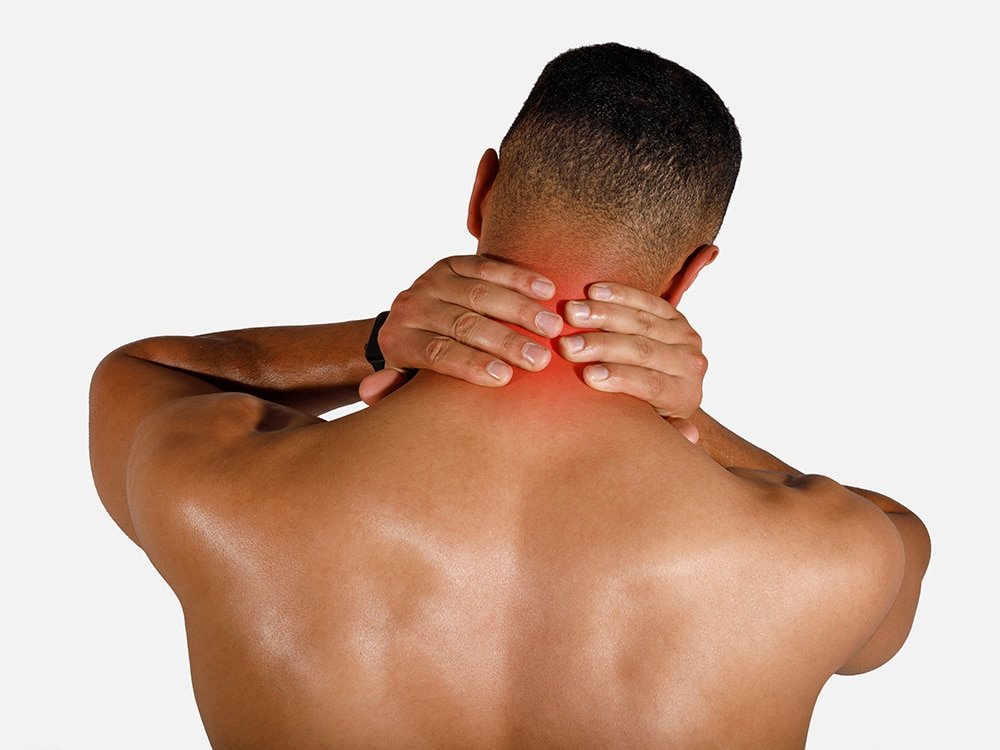
Why consult Dr. Hamza Beghdadi, chiropractor, for your neck pain
Several chiropractors in Montreal can treat a torticollis. Here is what sets the practice of Dr. Beghdadi, chiropractor, apart:
- Training in the CBP technique, grounded in objective postural measurements rather than a subjective assessment.
- Doctor of Chiropractic from UQTR (2013), more than ten years of practice.
- Dual scientific background: biochemistry and chiropractic.
- Complete evaluation at the first visit: history, orthopedic and neurological tests, palpation, postural analysis, X-ray if warranted.
- Care plan explained before treatment begins.
- Member of the Ordre des chiropraticiens du Québec (OCQ).
- Member of the Association chiropratique du Québec.
- Member of the Canadian Chiropractic Association.
- -
Why consult a chiropractor for a torticollis? Because the management makes the difference between a passing contracture and a postural imbalance that settles in.
The CBP technique and cervical alignment: a distinctive angle
The CBP (Chiropractic BioPhysics) technique aims to restore the physiological curves of the spine, in particular the cervical lordosis. In a postural or mechanical torticollis, posture directly influences the tension of the neck muscles; cervical alignment then becomes the target of care. This logic structures the postural correction at the clinic.
Schedule a Consultation With a CBP-Trained Chiropractor
A structured approach rather than improvised care. Book your evaluation at the clinic of your choice.
Book an appointmentUnderstanding torticollis: definition, subtypes, and anatomy
A torticollis is an involuntary muscle contracture affecting one or more muscles of the neck: a particular form of cervicalgia. This cervical muscle spasm, most often one-sided, causes intense pain and a sudden neck block that limits the rotation and tilt of the head. Benign in the majority of cases, but disabling day to day.
The chiropractic evaluation seeks to identify the mechanical cause before proposing a care plan. That is what makes the difference between quick relief and lasting improvement.
Acute, chronic, or recurrent: distinguishing the forms clearly
Three main forms shape the management:
- Acute torticollis: sudden onset, often on waking or after a wrong move. The most frequent in adults; lasts a few days.
- Chronic torticollis: persistent neck pain, often associated with a postural imbalance or cervical osteoarthritis.
- Recurrent torticollis: repeated episodes on the same postural profile, a signal of an untreated cause.
Other rarer forms exist: congenital torticollis in infants and spasmodic torticollis of neurological origin.
Sternocleidomastoid and facet joints: what happens in the neck
The sternocleidomastoid (SCM) is the muscle most often involved. Its contracture produces the characteristic tilt of the head to one side, with limited rotation to the other. The trapezius muscles often take part in the spasm.
At the joint level, an irritation of the facet joints of the cervical vertebrae triggers the protective muscle reflex. Working the soft tissues alone is often insufficient: as long as the facet remains irritated, the muscle re-contracts.
Documented symptoms and warning signs
The symptoms of torticollis vary from one person to another, but their combination points toward a specific mechanical cause. That is what the chiropractic evaluation documents, starting with the neck stiffness and the context in which it appeared.
Neck stiffness, neck pain, and a locked head: the typical manifestations
Patients generally report the following signs:
- Sharp neck stiffness, often on one side only, felt on waking or after a sudden movement; sometimes associated with night-time stiffness.
- Local neck pain, sometimes accompanied by a sharp pain or a pain radiating toward the shoulder and shoulder blade. This neck-shoulder-shoulder-blade pain is frequent when the contracture spreads.
- A head locked in an asymmetrical position, with rotation limited toward the painful side.
- Neck muscles and trapezius hard and tender to the touch.
- Associated headaches when the upper vertebral levels (C1-C2) are involved.
- Limited movement: reduced cervical mobility, certain gestures become impossible.
The intensity you feel does not always reflect the seriousness of the cause. A moderate contracture can signal a facet irritation that warrants an evaluation.
Causes and risk factors of a cervical contracture
A cervical contracture rarely arises all at once. Several factors add up, and it is their accumulation that eventually triggers the block.
Poor posture, a wrong move, and a bad pillow: the mechanical triggers
The most frequent mechanical causes:
- Prolonged poor posture at the computer, forward head posture, a position held frozen for hours.
- A sudden wrong move (turning the head quickly, lifting with a twist).
- A bad pillow or sleep position that holds the neck in lateral flexion through the night.
- Sedentary habits and weakness of the core muscles.
- Repeated efforts or intense training without recovery.
Posture occupies a central place in this list. A postural imbalance changes the distribution of loads on the cervical vertebrae, irritates the facet joints, and accelerates the onset of spasms. That is the mechanism the CBP approach targets.
Whiplash, stress, and other documented triggers
Other factors come into play more occasionally, with consequences that are sometimes lasting on the cervical spine and on neck pain:
- Whiplash after a car accident or a sports impact, sometimes handled on an emergency basis.
- Prolonged stress and chronic muscle tension in the trapezius.
- ENT infection in children (reflex torticollis).
- Cervical osteoarthritis in older patients.
- An underlying condition such as a cervical herniated disc that irritates the nerve structures.

Our postural chiropractic approach to relieve torticollis
The conservative approach remains the first line for the majority of neck pain, whether chiropractic, physiotherapy, or osteopathy. The difference lies in the quality of the evaluation and the consistency of the plan, whose goal is to avoid recurrence and provide a lasting correction.
Complete chiropractic evaluation: history, tests, and postural analysis
The chiropractic evaluation at the first visit relies on objective measurements and includes several steps:
- History: circumstances, medical background, postural habits, occupational profile.
- Orthopedic tests and neurological tests: range, strength, sensation.
- Postural analysis standing and seated, identifying asymmetries.
- Palpation of the neck muscles and the facet joints.
- Cervical X-ray if the clinical examination warrants it.
This step leads to a clear chiropractic diagnosis: being able to identify the cause precisely makes the treatment plan relevant. It is then explained at the second visit, to allow an adequate analysis of the condition.
Cervical adjustment, traction, and exercises: the care plan in practice
The care plan includes several elements adapted to your profile:
- Targeted cervical adjustment following the Mirror Image® principle of the CBP technique, sometimes complemented by a chiropractic adjustment or a light spinal manipulation.
- Corrective cervical traction, which acts on the ligaments of the neck and helps restore the mobility of the cervical spine.
- Joint mobilization, cervical mobilizations, and muscle-energy techniques (manual therapy) to adjust, release, and relax the neck muscles.
- Personalized postural exercises: stretching, strengthening, and mobility exercises, to mobilize the area and limit the risk of recurrence.
- Ergonomic advice for the workstation and the sleep position.
The number of sessions to relieve a torticollis varies. Simple acute cases resolve in a few visits, sometimes in less than a week for benign contractures. Chronic cases call for a more structured plan that addresses the postural cause; without it, the problem keeps blocking mobility and recurring.
The evaluation always precedes treatment, and the plan is explained before any care begins.
Let's discuss your situation at a first evaluation
A structured discussion, with no commitment. Bring your questions and history; we build the plan together.
Book an appointmentPreventing Recurrence Day to Day
Preventing recurrences comes down to your everyday habits.
- Neutral posture at the computer: screen at eye level, back supported, feet flat.
- Avoid any prolonged position: active breaks every 30 to 45 minutes.
- An ergonomic pillow that respects the alignment of the cervical curves.
- Do not sleep on your stomach, a position that forces the neck into extreme rotation.
- Core strengthening with a suitable physical activity.
- Recognize the first signs of tension to act before the acute episode.
To go further: the importance of good posture and 5 simple ways to improve your posture.
Would you prefer a personalized plan rather than generic advice?
Your postural habits are unique. A plan adapted to your profile gives better results than a universal list.
Book an appointmentBook an Appointment in Roxboro or Villeray
Two clinics in Montreal, the same standard of evaluation. Choose according to your area.
Roxboro Clinic — West Island
10400 boul. Gouin Ouest, Roxboro, QC H8Y 1W4.
Phone: 514-683-3476.
- Catchment area: West Island, Pierrefonds, Dollard-des-Ormeaux, Kirkland, Pointe-Claire, Sainte-Geneviève, West Laval, Ville Saint-Laurent.
Villeray Clinic — Montreal
1100 boul. Crémazie Est, bureau 210, Montréal, QC H2P 2X2
Phone: 514-742-7777.
- Catchment area: Villeray, Parc-Extension, Ahuntsic, Rosemont, Saint-Michel.
Chose The Best Clinic For You
Book an appointmentFrequently asked questions about torticollis treatment
What should you do for an acute torticollis?
What to do for a torticollis that has just appeared? Avoid the positions that worsen the pain, apply ice every hour (about ten minutes), and do not keep the neck immobilized longer than necessary. If the pain persists beyond a few days, a chiropractic evaluation helps identify the exact cause.
How long does a torticollis last?
The duration of an acute torticollis ranges from a few days to a few weeks, the form remaining benign in the vast majority of cases. A chronic or recurrent torticollis can extend over several months if the postural cause is not addressed.
Should you apply heat or cold?
Cold (a cold compress, ice) can help in the very acute, inflammatory phase. We generally recommend applying ice to calm the local inflammation, about ten minutes, every hour. Heat or cold: how best to relieve your case? Ask your chiropractor for advice.
How many chiropractic sessions are needed?
It depends on the form and how long the problem has been present. Simple acute cases often resolve in three to five sessions. Chronic or recurrent torticollis calls for a longer plan, aimed at correcting the postural cause and the spinal alignment, with follow-up to prevent recurrences.
Are cervical adjustments safe?
Cervical adjustments performed by a chiropractor, a health professional trained in this technique, are safe when the prior evaluation confirms their indication. The orthopedic and neurological tests performed by your chiropractor make it possible to establish a precise diagnosis and rule out contraindications.
How do you treat a torticollis that keeps coming back?
A torticollis that returns almost always signals a postural imbalance or a joint irritation that has not been corrected. The goal is not only to relieve the episode, but to identify the mechanism that brings it back. That is the angle of the CBP technique: evaluate the cervical alignment with objective measurements, correct the curves, then stabilize with postural exercises for lasting relief.
Can torticollis cause neck-shoulder-shoulder-blade pain or headaches?
Yes, it is frequent. The contracture of the neck muscles and the trapezius can radiate toward the shoulder and the shoulder blade. When the upper vertebral levels are involved, headaches of cervical origin often appear. As with the radiating pain linked to sciatica, the approach consists of tracing back to the mechanical cause.
Take the First Step With a Chiropractic Assessment
A torticollis that lingers is not inevitable. A clear diagnosis, a structured plan, targeted follow-up: that is the sequence that changes the results.